A Primer on Apartheid and the United Church
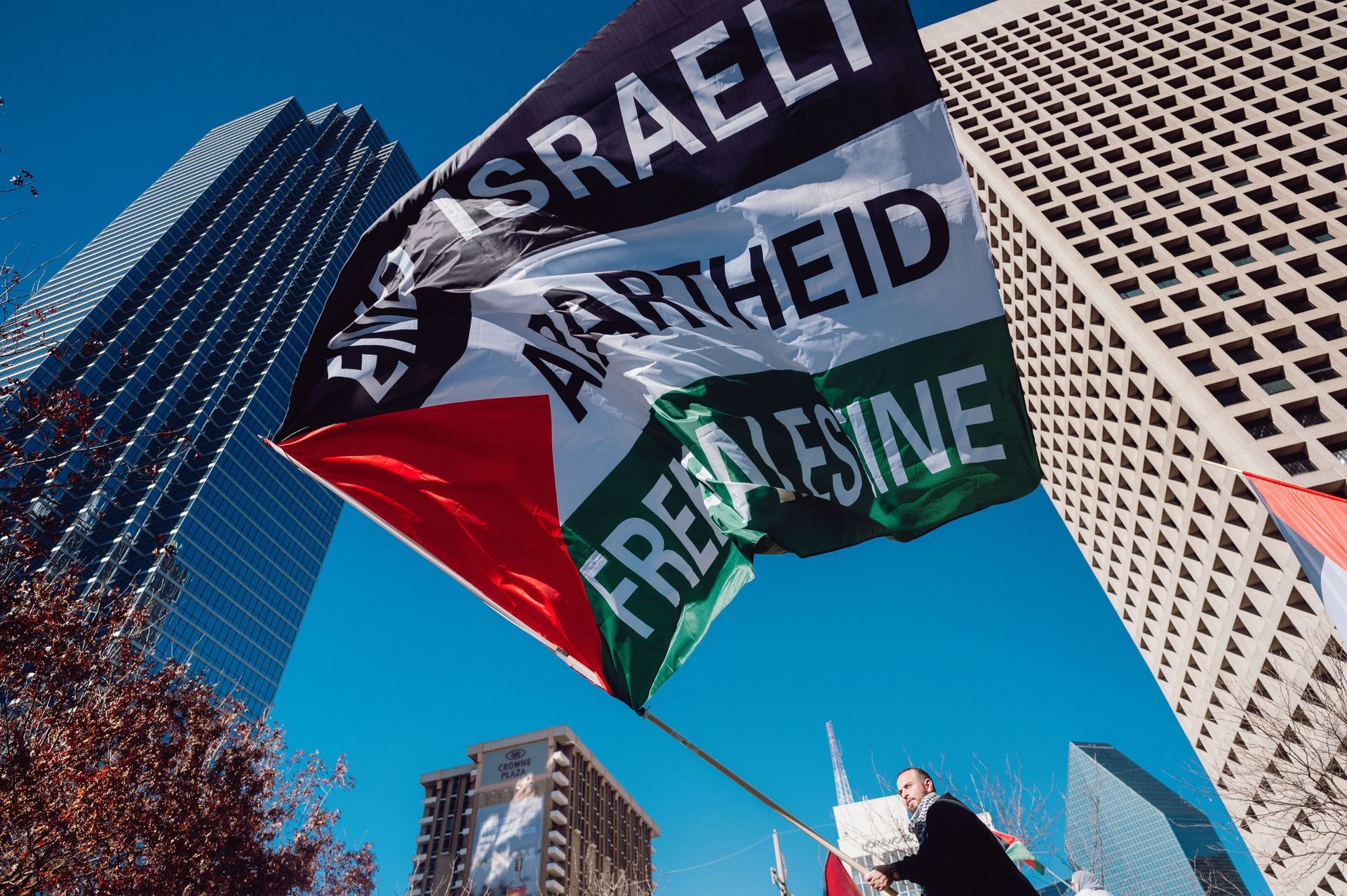
Image source: My Alfo Medeiros, with thanks.
Introducing: Apartheid - South Africa, Palestine & United Church of Canada (UCC)
Apartheid is nothing new to UCC and its antecedents. In the late 19th Century, the denominations along with other Christians churches helped shape Canada as an apartheid society by its role in the development and implementation of the nation’s 1876 “Indian Act”. Essentially the Act provided the legislative framework by which European-origin Christian settlers dominated and treated First Nations people as less than fully human. Later Metis and Inuit peoples were added to the category of Indigenous Peoples under the Indian Act. The label “apartheid” (Dutch root meaning: separateness) had not been invented at the time, but the reality was implemented and awaits termination.
In 1984,* The UCC was led to confront apartheid – not the Canadian version, but that of the Republic of South Africa. Strongly worded regional proposals called on the church’s General Council to denounce apartheid. In its report to the General Council, the Division of World Outreach recognized “apartheid” not only as a “political, social, economic and ideological sin, but as a heresy.” (p. 355)
In South African apartheid, the report stated, “We have … a central issue of faith which precludes neutrality, having serious implications for our life and action, specifically as to how we support the victims of apartheid, and how we oppose its architects and enforcers. As our New Creed declares: God calls the church ‘to love and serve others, to seek justice and resist evil.’” (p. 355 )
In both the Canadian version of apartheid and the South African variety, the goals were similar. “The intention of the apartheid policy is that there will them be no black South Africans.” (p. 355) Canadians can hear echoes of political leaders negating Treaties between the Crown and sovereign First Nations, and, advocating social engineering by which Indigenous Peoples would be fully assimilated into the white Christian society.
In South Africa, the white Dutch Reformed Churches (DRC) presented apartheid to the South African population as the will of God “the division of the church on racial lines as well as the politics of ‘separate development.’” The World Alliance of Reformed Churches in 1982, on the other hand, declared its firm conviction “that apartheid is incompatible with the gospel on the grounds that: “a) it is based on a fundamental irreconcilability of human beings, thus rendering ineffective the reconciling and uniting power of our Lord Jesus Christ; b) in its application through racist structures it has led to exclusive privilege for the white section of the population at the expense of the blacks; c) it has created large scale deportation causing havoc to family life, and suffering to millions.” (p. 356)
The DRC did not oppose the apartheid regime, instead it reinforced it to the detriment of Black and Brown (“coloured”) South African peoples. The racist government used church support to intensify its violent attacks on any opponents of the regime’s policies – using the standard labels reserved for resisters: “communists”, “terrorists”, etc. while, in fact, legalized violence, terrorism, and police brutality were and still are the tools and methods of suppressors.
The World Council of Churches at its 1983 Assembly in Vancouver stated “its conviction that ‘apartheid stands condemned by the gospel of Jesus Christ, the Life of the World, and that any theology which condones or supports it, [is] heretical.”
In the heyday of UCC’s prophetic witness, the 30th General Council responded actively to various proposals and resolutions from various parts of the Church expressing their principled opposition to South Africa’s apartheid policies. The UCC affirmed the 1982 Ottawa statement of the World Alliance of Reformed Churches, which declared “that apartheid…is a sin, and that moral and theological justification of it is a travesty of the gospel, and in its persistent disobedience to the word of God, [it is] a theological heresy.” South Africa’s apartheid laws ended in 1994 with democratic elections.
The UCC has reserved the epithet “heresy” for no other theological false teaching! Only the DRC justification of apartheid has earned this label that divides humanity into privileged and lesser human beings and justifies implementation of this racism by diverse means, including human displacement, ethnic cleansing, and murder.
Today we are confronted by apartheid not only in Canada, but also catastrophically in Palestine. The goal of the State of Israel’s Zionist leadership is equally clear: ethnic cleansing and apartheid policies along with military ruthlessness aiming to rid Palestine of its Indigenous Palestinian peoples – Christians, Muslims, Jews, Druze, Bedouin, and others of no particularly faith - so that a Jewish dominant apartheid state can be established and sustained.
People of many faiths including Judaism and Christians understand this goal to be counter to the will of the Holy One. In response to the calls for solidarity and liberation by Palestinians, UCC folk are urged to resist apartheid’s further implementation by active, peaceful advocacy and solidarity. There can be no theological or ethical justification and no international legal affirmation for the creation of an exclusively Zionist state in which non-Jews are treated as lesser human beings with fewer human rights. This is the internationally condemned crime of apartheid.
The world community of nations is clear, as is the General Council of The UCC, that apartheid is not only an evil and its justification a fraud, but it is also a crime against humanity and must be resisted by all who advocate for truth and justice - the only bases for peace in Palestine. Conquest has been Israel's failed effort for over a century. Self-determination and liberation with equal rights and access to the resources for abundant living must be granted to all the peoples living in Palestine.
Appendix
South Africa’s apartheid laws were enacted and sharpened after the white-minority National Party was elected in 1948. They included the following denial of these fundamental human rights:
To vote; to live permanently or own property in 87% of the land area; to move freely from place to place (rigid pass laws required black to carry at all times reference books containing all personal data; to free and equal educational opportunities; to marry a person of a difference colour; to freedom of the press (witness bannings of black newspapers); to South African citizenship as they were forced to move into four “independent homelands” and eventually five more such “homelands”.(p. 355)
Apartheid is defined as a crime by the 2002 Rome Statute of the International Criminal Court as inhumane acts of a character similar to other crimes against humanity “committed in the context of an institutionalized regime of systematic oppression and domination by one racial group; over any other racial group or groups and committed with the intention of maintaining that regime.”
(*) Citations are from Record of Proceedings of the 30th General Council, Morden Manitoba 1984; the page reference is cited in brackets. Published by The UCC, L'Eglise unie du Canada.