Reflections on Journeying in Western Canada
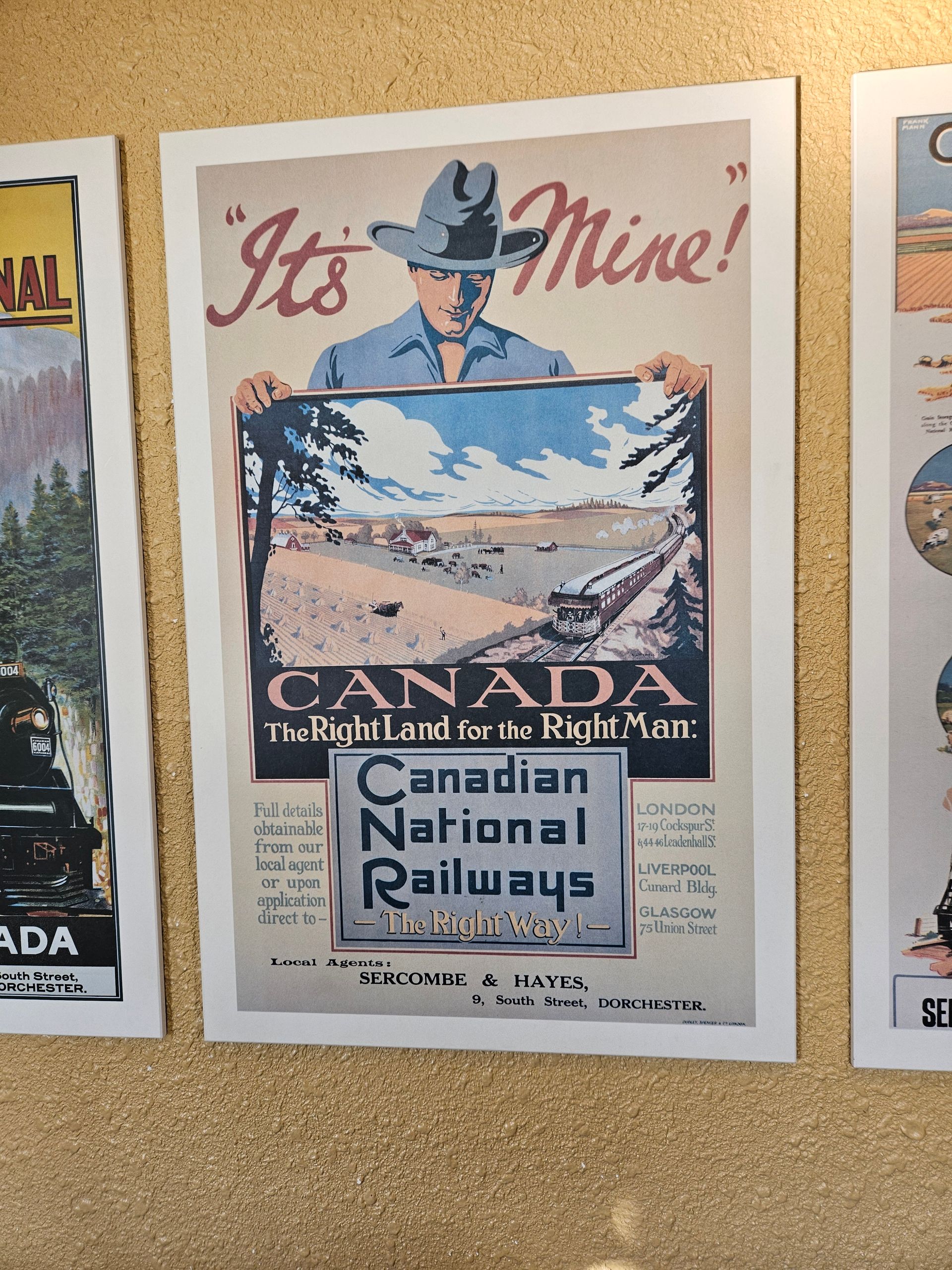
The above poster in the Parks Canada museum portion of the Jasper AB train station reveals the spirit which the then government of Canada and rail barons wanted to communicate to potential settlers "on native land". It reveals a colonial mindset which honoured neither the reality of dispossessed Indigenous Peoples nor the Creator's sacred gift beautiful and bountiful land.
Compare this poster to one in the Churchill train station communicating Indigenous values and Spirit: "This is how we were taught as Native People. Land is a gift that you use to live ... protect it and look after it. (Chief Vera Mitchell, Poplar River First Nation)
From a poster at Wanuskewin Heritage Park voicing Indigenous belief: "We believe the rocks, the water, the animals, the plants and the Earth - have Spirit. When we create things, we are creating new forms for Spirit. All of our material goods such as our clothing and tools, and our artwork, such as beading, dancing, and storytelling, reflect our relationship with Spirit. Everything has meaning, and it is all beautiful, as Creation is beautiful.
~ ~ ~ ~ ~ ~~ ~ ~ ~ ~ ~ ~ ~
To Churchill, Manitoba
Train to where!? Glenys and I had heard that there was a train to Churchill, Manitoba but that the tracks had sunk into the melting perma-frost and tundra and the then American owner didn’t want to spend the money to repair the route. But at the Winnipeg NDP convention in March, a table-sharer told us he’d been to Churchill on the Via Rail train which actually starts from the station in Winnipeg. Then just a little latter we happened on two women, who happened to be train engineers on the Churchill run. They too recommended the trip. Okay, let’s go!!
We did! From Ottawa we flew to Winnipeg on September 12th two days before train time. The extra Winnipeg days gave us a chance to worship at the venerable Knox United Church reaching out into the downtown community. But also, to visit the Human Rights Museum located just beyond the railway tracks from the Humphry Inn & Suites we’d booked accommodation. The noise awakened by the creation of the Palestine exhibit gave us enough reason to attend.
The Palestine Exhibit
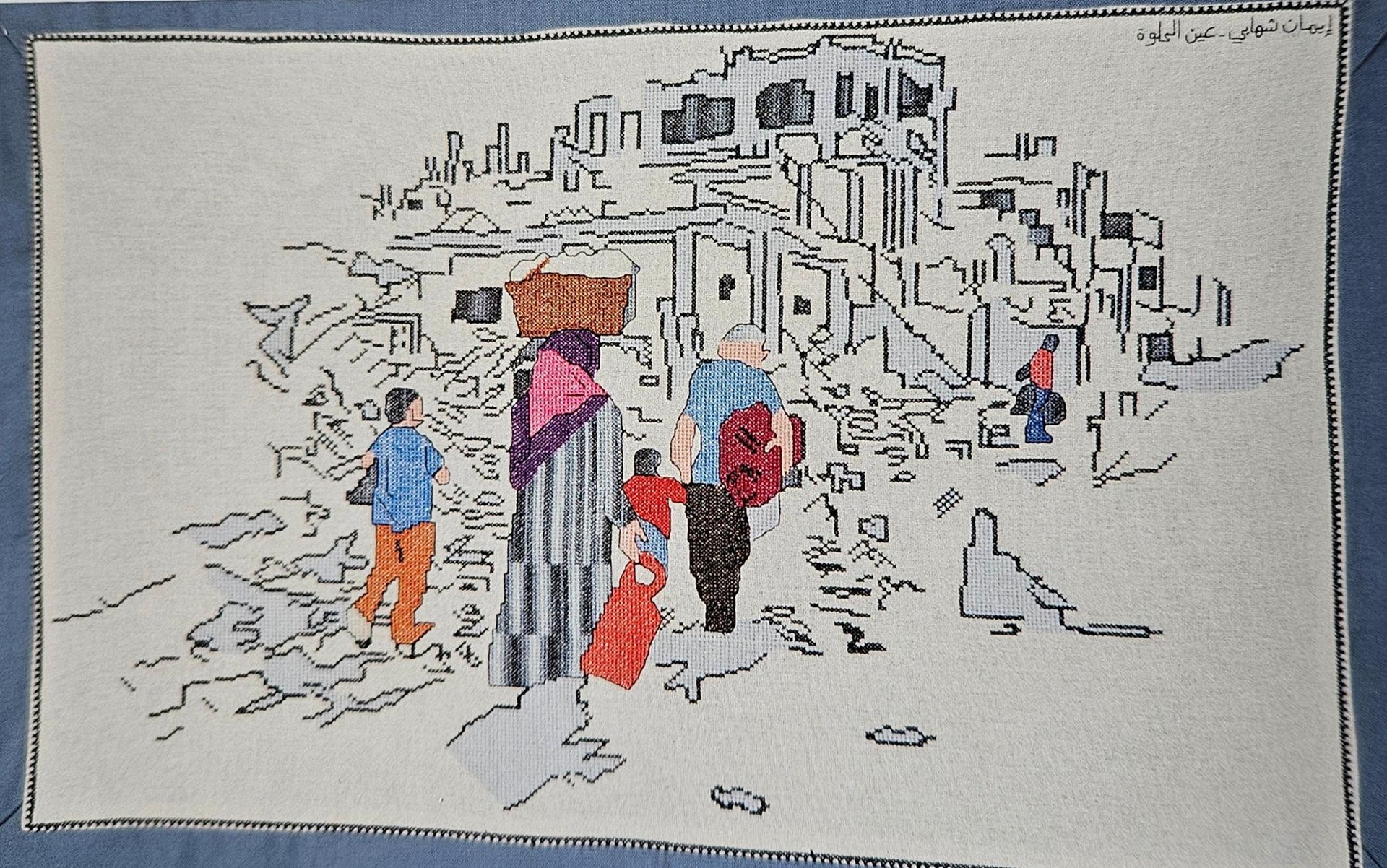
Well, the exhibit was on the fifth floor of the Museum in a space very small compared to other more prominent exhibits. The display told the century-long story of Palestine’s ongoing catastrophe. The pro-Israeli lobby and its supporters have made it difficult to get truthful accounts of Israel’s horror assaults on Palestine. But the curators of the exhibit worked carefully and honourably to tell the story of the Israeli occupation and domination of indigenous Palestinians since the Nakba – the Catastrophe in 1948 - and the current genocidal assault on Gaza. It’s too bad that more space wasn’t provided to tell the fuller story, but the essence was revealed. Reading Jewish historian Illan Lappe’s “The Ethnic Cleansing of Palestine” or his “Ten Myths about Israel" - both confirm the museum’s exhibit as a public contribution to evidence-based truth– reporting this fundamental moral tragedy of our time. It’s worth a visit to the Museum.
Train to Churchill
The next day, we boarded the Via Rail train 693 in the station just down the street from our hotel. The train cars looked very familiar to me – I rode them or their doppelgängers numerous times in the 1960s travelling from Vancouver’s UBC to home for holidays. No roomette was available when we booked, but our seating became bunk-berths for the two on-board nights. The trip to Churchill lasted 45 hours - lots of time to see the changing landscapes and talk with two American couples, six German tourists, and an Indigenous family in the sleeper car. Via The Pas, Thompson, and Gillam in north-central Manitoba, and then straight run north. The sun rose as we arrived at our destination–58 degrees N & 94 degrees W - just short of the Arctic Circle. Our Air BnB-type lodging for the next two nights, appropriately named the Bear’s Den Guest House, was but a ten minutes’ walk from the station.
Churchill names itself: The Polar Bear and Beluga Whale Capital of the World. Lots of accommodation, various restaurants, several museums, guided tours to view the bears and beluga whales (from a safe distance), and a modern town complex hosting school, hospital, library, ice rink, bowling alley, municipal offices, and more – all say “welcome tourists”. If power were to fail, the complex serves as refuge and warming centre. Scientific research takes place in the Northern Studies Centre. All that and more for a town of about 1000 people.
The area has a long history well beyond 1732 when the Prince of Wales military fort was built to guard against (other European) enemies invading the area. During World War II the town’s harbour l loaded freighters with supplies to the European front.
We were there in the town’s quiet shoulder season: autumn as the ice begins to form is the time to see the bears looking for seal meals on the ice. Summer is the season for belugas (a swim in Hudson Bay is possible for the hardy) and observing flocks of birds heading north. There was no ice when we visited the area, but from a distance we followed a mother bear and her two cubs grazing and resting for the better part of a morning.
We were lucky to have conversation with a resident of Rankin Inlet. He made us realize that air travel was an alternative to Via Rail. He was, however, headed home after a conference in Churchill but to get home he had to fly south to Winnipeg and then fly past Churchill to Rankin!! A sign that Canada has a long way to go for serious travel to the great North.
Will the town become an important transport nodule for exporting Canadian agricultural products to Europe? Huge grain elevators are already in place. The harbour may need some dredging. And the rail tracks need some more shoring up to carry the heavy rail cars. There is lot of talk about Churchill again becoming a substantial northern port to carry agricultural and other freight to Europe as part of the Canada Builds vision. But our tour guide also expressed some hesitation. Will development bring temporary legions of workers who don’t know or respect the fragility and rigours of life in the north? Will locals really have a chance to benefit from Canada Builds’ attention or will the profits just head south as usual? Will the development scare off the bears and the ships threaten belugas and undermine the survival and livings locals persist in?
Our three days in Churchill left us grateful for this chance to glimpse a piece of the true “NORTH” of Canada. We boarded the southbound Via Rail train in the evening with the berths ready for the first of the two nights of travel. At midnight all the tourists gathered in the dome car to watch for the norther lights – not as clear as hoped, but just enough to confirm we were in the north!
Saskatchewan Bound!
Our train, we discovered, passed within twenty kms of my brother’s place in Saskatchewan. A regular but relatively unnoticed stop in the town of Canora (not Kenora Ontario) made a visit easy. John was waiting for us and we spent two days with him and Marg, his wife at their home on Crystal Lake.
We rented a car in Regina and travelled to Saskatoon. (We discovered that Saskatchewan has no regional transportation and major car rentals only in the two principal cities. With our friends, we visited the Wanuskewin Heritage Park and centre (www.wanuskewin.com) which honours the Northern Plains indigenous peoples and their deeply significant relationship with the bison. Although intentionally almost exterminated by the settler colonizers in the late 19th century, a growing herd of 50 buffalos again grazes in this part of the Northern Plains.
To Alberta
From Saskatoon we drove west through prairie lands - largely harvested, some still waiting for the combine – but all dazzlingly beautiful and bearing rich nutrient gifts for Canada and the world.
In Edmonton we wandered on the Alberta legislature’s impressive grounds. We were amazed how few signs (or noise) about the bewildering 10 question referendum we noticed. Happily, we simply passed it all by trusting that wisdom might carry the day on October 19th.
In Hinton we began to welcome the amazing Rocky Mountain vistas. It wasn’t long before we arrived in Jasper, where we hoped to worship with the United Church congregation in their post-wildfire temporary quarters. In 2024, both the United church and the Anglican church had been burned to the ground along with many Jasper homes in 2024. We didn't find the worship venue, but on the United church site was a sign stating: “Jasper United Church is proud to partner with the Municipality of Jasper and Parks Canada for this interim housing.” About a dozen house trailers were parked on the bereft church lot to accommodate families waiting for the completion of their new homes . A sign of generous hospitality.
The Rocky Mountains
I enjoyed looking into the Jasper train station which still welcomes CPR’s “Canadian” train, as it did when I was a student in the 1960s. A small museum brought back other memories of the significance of trains for the development of our nation. Historic posters (like the one above) invited new settlers to occupy the lands, but did nothing to acknowledge the cost and suffering of First Nations to make this possible.
From Jasper we drove to the Columbia Icefields - glaciers receding noticeably and threateningly as the earth warms. But the peaks and the valleys were breathtaking. We stayed the night at Saskatchewan (River) Crossing feeling the chill of elevation and the purity of the air. From there to the city of Rocky Mountain House with a fascinating heritage museum displaying so many of the artefacts that came with settlement in the late 19th and early 20th centuries. Then a final drive in the foothills and beyond to Calgary, where we would catch a flight directly to Ottawa.
The drive through Alberta was spectacular because of the Rockies. We were surprised, though, to see errant orphan gas/oil wells dotting the landscape – apparently a huge burden of debt which the province has to recover from fat-wallet fossil fuel companies. With all the sunshine in the prairie region, you’d think that every house and barn would have solar panels to provide free non-polluting electricity. Nope! Go figure!
This Land!
What a country we live in! It is immense and far larger than about 40 million humans can fully steward. In our presumed wisdom, we have taken for granted that we settlers know enough to carry out this mission. Thank God, much of the landmass is looked after by nature itself. Settler society hasn’t been able to destroy it all, yet.
We might be better stewards if we began to really trust and rely on the experience and the wisdom of Indigenous Peoples – in the north, in the far north, and in the east and west. Our current political leadership may be ably keeping the American wolf from our home on native land, but we too seem more easily inclined to extract riches and plunder the vast plains, mountains, seas, fertile fields, and urban areas than to live gratefully in shared respect and friendship with our diverse peoples.
Stewards or Hewers of Wood and Drawers of Water ... or?
We are the trustees of the Creator’s gift of almost 10 million square kilometres (3.85 million sq. miles). The part of Turtle Island that we name “Canada” is almost as large as all of Europe (98%) with its 44 different countries. Our government, shortsightedly, is thinking that to Build Canada we need foreign investors to buy up airports and other assets, to extract more fossil fuels, build more pipelines, and mine precious minerals in order to grow. We seem willing, it seems, to contradict our “sovereignty” convictions to do so! Urban corporate capitalistic hubris thinking threatens nature's groans and call.
Given how blessed we have been and continue to be, I believe this nation “from sea to sea to sea” merits every person investing small and larger amount in a Canada Sovereignty Bond (as we did in World War II with Victory Bonds) Let’s build Canada by investing in bonds that can fund key areas of need: more complete head to toes health care, solar and other renewable energy in all spheres, protected natural environments on land and in seas, affordable efficient housing, effective and efficient transport and transit systems, innovative educational systems, and much more.
We need to be able as people of Canada genuinely to say: we are stewards of this Creator-given trust – a home for a great diversity of human beings in a natural setting full of life. Our trip was much about visiting friends and family, but as I look back on all we saw and experienced, it also became an amazing revelation for recognizing the immensity and majesty of the land/sea/air and the opportunity afforded to all 40 million of us to gratefully and humble embrace this great land/sea/air mass. Let’s grasp the possibilities as Gifts of the Creator.